


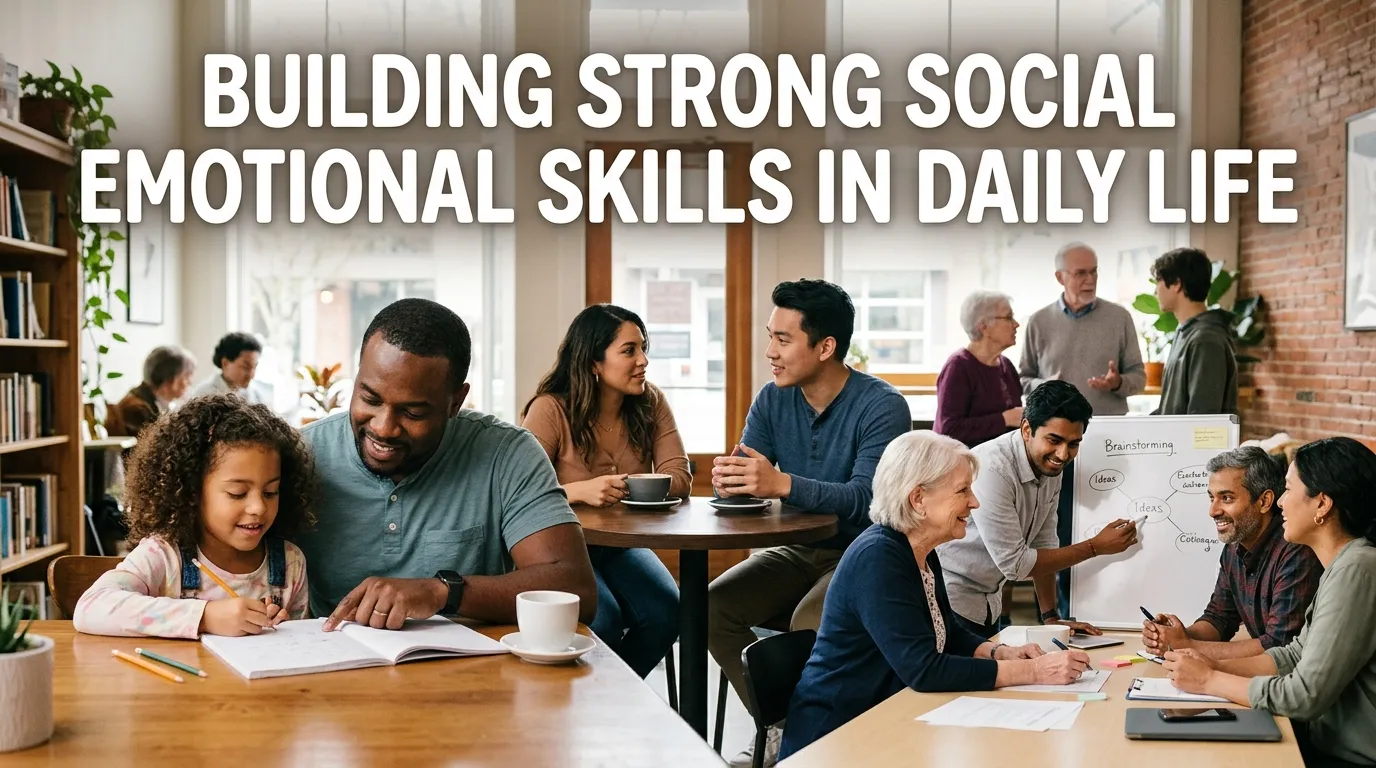
Mastering Social emotional skills transforms how you connect, communicate, and thrive. We explore essential daily habits for emotional growth and lasting personal success.
Building robust emotional intelligence requires consistent practice and intention. This comprehensive guide covers proven strategies, common pitfalls, and expert insights to help you navigate life’s challenges. You will learn actionable steps to foster healthier relationships, manage stress, and communicate effectively.
The Foundation of Emotional Intelligence
Navigating the complexities of modern life requires more than just academic knowledge or technical expertise. Building robust Social emotional skills allows you to understand your deepest feelings, communicate your needs effectively, and maintain strong, authentic connections with the people around you. Social emotional skills are the core abilities that help us manage our emotions, set positive and realistic goals, feel compassion for others, and make responsible decisions in high-pressure situations. When we practice these vital habits daily, we experience significantly less stress, form deeper bonds, and achieve a profound sense of overall well-being.
To truly grasp how these abilities function, we must break them down into practical, everyday components. People who actively practice Social emotional skills tend to perform better in their professional environments, experience fewer interpersonal conflicts, and enjoy higher levels of mental well-being and life satisfaction. They adapt to change with resilience and view challenges as opportunities for growth rather than insurmountable obstacles.
The Science Behind Emotional Regulation
 Psychologists and behavioral scientists have spent decades studying how our brains process emotions and interact with our environments. Research from the Collaborative for Academic, Social, and Emotional Learning shows that emotional regulation is deeply tied to our cognitive functioning. When we experience strong emotions, our brain’s amygdala can override our prefrontal cortex, leading to impulsive reactions. Developing your Social emotional skills strengthens the neural pathways between these regions, allowing for more thoughtful, measured responses.
Understanding Your Emotional Triggers
An emotional trigger is a specific situation, comment, or environment that provokes an intense emotional reaction. Identifying these triggers is the first step in mastering your Social emotional skills. Once you know what sets off a negative reaction, you can develop proactive strategies to handle those moments gracefully. This proactive stance is what separates highly emotionally intelligent individuals from those who struggle with interpersonal dynamics.
The Four Pillars of Emotional Development
Developing your Social emotional skills involves several interconnected areas. Each area requires specific attention, dedicated effort, and regular practice to master.
Fostering Deeper Connections
Understanding yourself is the absolute first step toward meaningful growth. When you practice self-awareness, you learn to identify your specific triggers, underlying strengths, and personal limitations. This internal clarity allows you to approach external situations with deep confidence and a level head. Recognizing your own emotional state prevents you from projecting negativity or unresolved frustration onto others, which is a crucial aspect of maintaining healthy environments at home and at work.
Connecting Through Compassion
Understanding others is just as critically important as understanding yourself. Developing empathy allows you to put yourself in someone else’s shoes, viewing the world through their unique lens. This means listening without judgment and fully validating the feelings of those around you, even if you disagree with their perspective. When people feel genuinely heard and understood, trust flourishes organically. Cultivating this ability bridges gaps between diverse perspectives and helps us navigate complex social dynamics smoothly.
Creating Lasting Bonds
Humans are inherently social creatures, and relationship building is essential for our survival, happiness, and mental health. Strong Social emotional skills empower you to communicate clearly, cooperate enthusiastically with others, and resist inappropriate social pressure. Establishing healthy relationships involves a delicate balance of give and take, active listening, and unwavering mutual respect. When you prioritize these specific elements, you create a supportive network that helps you weather difficult times.
Navigating Disagreements
No relationship, no matter how strong, is immune to disagreements. Effective conflict resolution ensures that disputes do not destroy the bonds you have worked so hard to build over time. Using your Social emotional skills during an intense argument helps you stay calm, focus entirely on the issue at hand rather than resorting to personal attacks, and find mutually beneficial solutions. This collaborative, respectful approach turns potential disasters into incredible opportunities for growth.
Actionable Strategies to Integrate at Work and Home
 Improving your Social emotional skills requires consistent, daily effort over a long period. You can easily integrate small, powerful habits into your routine to see massive changes in how you experience life.
Start with Daily Reflection
Begin your day by checking in with yourself before checking your phone or email. Ask yourself how you are feeling physically and emotionally, and determine what you need to be successful today. This simple but profound habit boosts your emotional vocabulary and helps you manage stress before it overwhelms you. Journaling for just five to ten minutes every morning provides a safe, private space to process complex thoughts and emotions.
Practice Active and Engaged Listening
When talking to someone, give them your undivided attention. Put away your devices, maintain comfortable eye contact, and listen strictly to understand rather than formulating your reply while they are still speaking. This specific practice not only strengthens your Social emotional skills but also makes the other person feel incredibly valued. Repeat back what you heard in your own words to ensure you understood them correctly and accurately.
Manage Stress Proactively
High, unmanaged stress levels severely impact your ability to use your Social emotional skills effectively. Incorporate proven stress-reduction techniques into your daily schedule, such as deep breathing exercises, short walks in nature, or guided meditation. Recognizing the physical signs that you are reaching your emotional limit allows you to step back and recharge, successfully preventing damaging emotional outbursts.
Cultivate a Growth Mindset
People with strong Social emotional skills view failures as learning opportunities. Cultivate a growth mindset by reframing negative thoughts. Instead of saying, “I am terrible at public speaking,” shift your perspective to, “I am learning how to communicate more effectively in front of groups.” This subtle shift in language drastically alters how you perceive challenges and your ability to overcome them.
Comparing Approaches: Reactive vs. Proactive
Understanding the difference between reacting impulsively and responding proactively is central to developing your Social emotional skills. The table below illustrates how different approaches lead to vastly different outcomes in everyday scenarios.
|
Scenario |
Reactive Approach |
Proactive Approach |
Expected Outcome |
|---|---|---|---|
|
Receiving critical feedback at work |
Becoming defensive and arguing |
Listening actively and asking for clarification |
Professional growth and improved trust |
|
A friend cancels plans last minute |
Sending an angry, passive-aggressive text |
Expressing disappointment but offering to reschedule |
Maintained friendship and mutual respect |
|
Feeling overwhelmed with tasks |
Shutting down and ignoring responsibilities |
Prioritizing tasks and asking for help |
Reduced stress and completed goals |
|
A disagreement with a partner |
Yelling and bringing up past mistakes |
Taking a timeout and discussing the issue calmly |
Deeper understanding and faster resolution |
Expert Insights on Daily Implementation
 Leading psychologists from the American Psychological Association emphasize that emotional intelligence is an ongoing journey, not a final destination. Experts recommend setting micro-goals to improve your Social emotional skills incrementally.
For instance, rather than trying to overhaul your entire communication style overnight, focus on simply pausing for three seconds before responding to an irritating comment. These small, deliberate pauses interrupt automatic stress responses and allow your higher reasoning to take over. Experts also advise seeking out diverse social environments to continuously challenge and refine your Social emotional skills. Engaging with people from different backgrounds forces you to expand your perspective and practice profound understanding.
Common Mistakes to Avoid When Growing Your Abilities
Many well-intentioned people stumble when trying to improve their emotional habits. Watch out for these frequent, progress-halting errors:
- Ignoring your own boundaries just to please others can lead to severe burnout.
- Suppressing negative emotions instead of safely addressing them causes them to explode later.
- Assuming you know exactly what someone else is thinking without asking clarifying questions.
- Reacting immediately when angry instead of taking a mandatory cooling-off pause.
- Viewing emotional vulnerability as a personal weakness rather than a courageous strength.
- Over-apologizing for expressing valid concerns or basic needs.
- Neglecting physical health, forgetting that sleep and nutrition directly impact emotional regulation.
Deepening Your Practice: Advanced Techniques
Once you have mastered the basics, you can elevate your Social emotional skills using advanced psychological techniques.
Cognitive Reframing
Cognitive reframing involves identifying irrational or negative thought patterns and consciously replacing them with realistic, positive ones. If you catch yourself catastrophizing a minor error at work, reframe it by acknowledging the mistake, outlining a quick solution, and recognizing that one error does not define your career. This technique significantly enhances your emotional resilience.
Assertive Communication
Balancing kindness with firmness is a hallmark of highly developed Social emotional skills. Assertive communication means expressing your thoughts, feelings, and needs directly and honestly, while remaining entirely respectful of the other person’s rights. It sits right in the healthy middle ground between aggressive hostility and passive submission.
Mindfulness and Emotional Separation
Mindfulness teaches you to observe your feelings without becoming completely consumed by them. When you feel a surge of anxiety, advanced Social emotional skills allow you to say, “I am experiencing anxiety right now,” rather than, “I am an anxious person.” This subtle separation prevents your emotions from dictating your identity and actions.
The Long-Term Benefits of Emotional Mastery
Investing time and energy into your Social emotional skills yields compounding returns throughout your life. In the workplace, individuals with high emotional intelligence are frequently promoted faster, navigate office politics more effectively, and experience higher job satisfaction. In personal spheres, these abilities are the glue that holds long-term marriages, deep friendships, and healthy family dynamics together through seasons of hardship.
Furthermore, strong social-emotional skills are directly linked to better physical health. By managing stress efficiently, you lower your cortisol levels, reduce blood pressure, and improve your immune system’s functionality. The mind-body connection is undeniable, and emotional regulation is a critical component of holistic wellness.
Frequently Asked Questions
1. What exactly are Social emotional skills?
Social emotional skills involve the critical abilities used to manage daily emotions, set positive goals, show genuine compassion for others, establish positive relationships, and make responsible choices. They are essential for navigating daily life effectively.
2. Why are Social emotional skills so important for adults?
Adults need these precise abilities to manage workplace stress, build healthy romantic and platonic relationships, and navigate conflicts effectively. They contribute significantly to overall mental health, career success, and life satisfaction.
3. How can I rapidly improve my emotional regulation?
You can improve emotional regulation by practicing daily mindfulness, pausing for three seconds before reacting, and learning to identify your specific emotional triggers. Consistent, dedicated practice helps rewire your brain to respond calmly.
4. Can Social emotional skills really be taught later in life?
Yes, they can absolutely be learned and strengthened at any age. Through intentional practice, self-reflection, and sometimes professional therapeutic guidance, anyone can improve their emotional intelligence.
5. What role does listening play in emotional intelligence?
Listening is a foundational element. It allows you to gather accurate information, demonstrate deep respect, and respond appropriately, which drastically reduces misunderstandings, hurt feelings, and unnecessary conflicts.
6. How do I practice genuine empathy daily?
You can practice by actively trying to view situations from another person’s unique perspective, validating their feelings without immediately offering unsolicited solutions, and maintaining an open, non-judgmental mindset.
7. What is the difference between emotional intelligence and Social emotional skills?
Emotional intelligence is the broader psychological framework of recognizing and managing emotions, while Social emotional skills are the specific, actionable abilities that you apply in real-life situations.
8. How long does it actually take to develop these abilities?
Development is a lifelong, ongoing process. However, by practicing these techniques daily, you can start seeing noticeable, positive improvements in your mood and relationships within just a few weeks.
9. How do these abilities affect my workplace performance?
They dramatically improve teamwork, enhance your leadership potential, and reduce toxic workplace drama. Employees with strong emotional management are generally more adaptable and much better at collaborative problem-solving.
10. What should I do if I severely struggle to control my anger?
If anger is a frequent issue, start by identifying the physical signs of frustration early. Step away from triggering situations, practice deep breathing, and consider seeking support from a licensed therapist to develop healthier coping mechanisms.
